June 2021
When we reached out to Jill Zachary, Director of Santa Barbara City Parks & Recreation Department in June 2021, Director Zachary explained that “a community discussion about the location will begin in 2022.” She further explained that the Department is not positioned to start that discussion until 2022 “due to funding and staffing limitations as well as other projects that are underway.”
In June, the Department hung 2 signs at the West Beach Park. One sign explains that a community discussion about balancing the birds needs and recreation will begin in 2022. The other sign provides information about the nesting herons, a link to the Audubon Society and the SB Wildlife Care Network phone number to report stressed birds.

Testimony
June 20, 2019
To Santa Barbara Planning Commission & The Coastal Commission
Planning Commission Hearing, City Hall, City Council Chambers, 735 Anacapa St, Santa Barbara, CA
RE: LCP Update: Request to declare the Black-crowned Night Heron and Snowy Egret nesting area on Cabrillo Boulevard, at the end of Castillo St. as Environmentally Sensitive Habitat Area (ESHA)
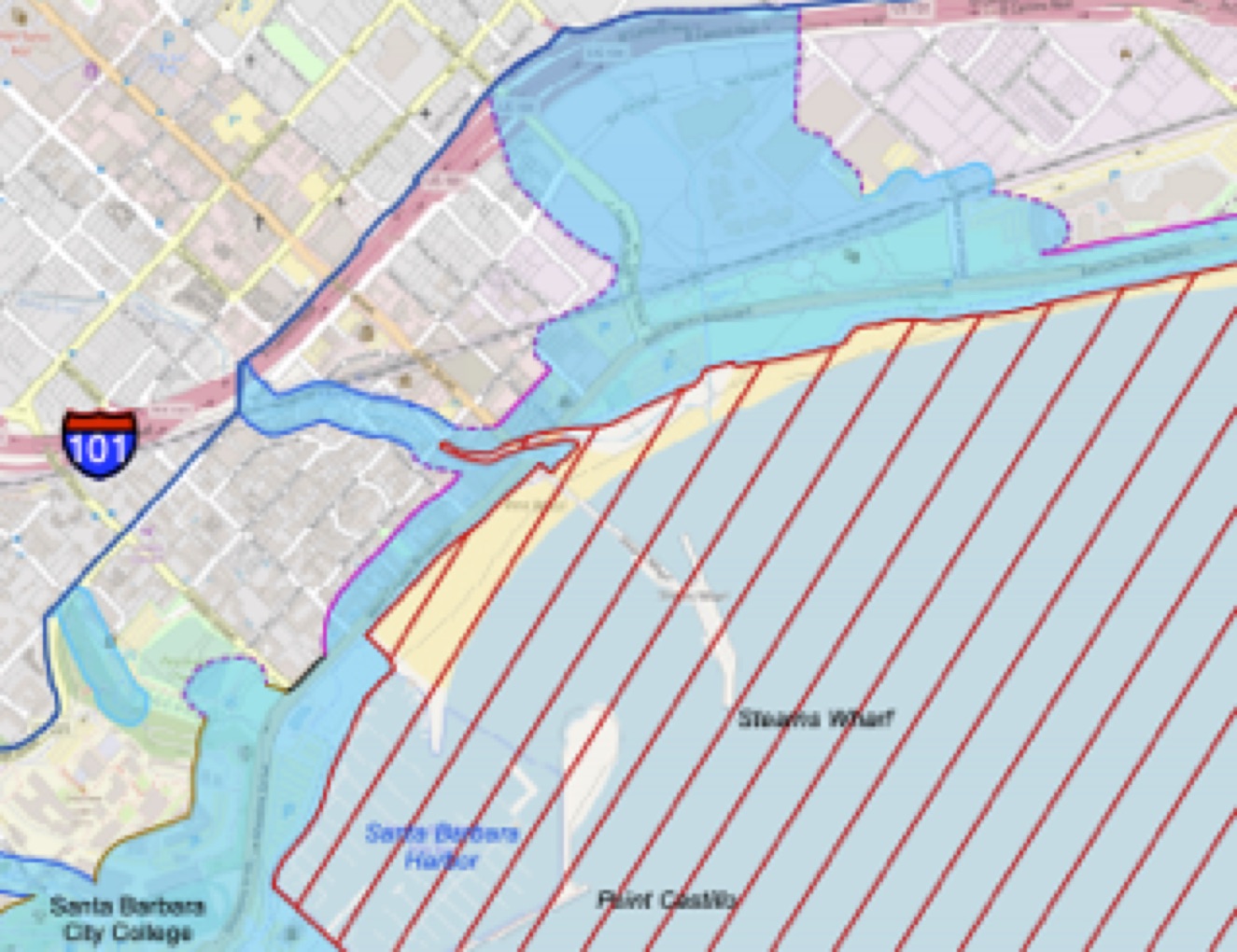
There are seven Weeping ficus trees along the south side of Cabrillo Boulevard at the foot of Castillo Street in an area within the appeal jurisdiction of the Coastal Commission according to the map, a section of which is reprinted below. These trees are nesting trees of Black-crowned Night Herons (BCNH) (at least 23 active nests) and Snowy Egrets (at least 10 active nests) according to the recent count by Mark Holmgren noted in the Santa Barbara Audubon Breeding Bird Survey in June 2019. There are an additional 5 active BCNH nests in two ficus trees at the end of Bath Street that I reported to SB Audubon on June 13. The nests on Cabrillo are nesting sites from April through September as noted on the breeding bird records going back to 2004, but many people recall the birds nesting there long before. The BCNH young birds (and some adults and Snowy Egrets) regularly use the area enclosed by a fence adjacent to the trees. Due to the fence, they are protected from curious onlookers as well as dogs and children that could scare the birds away. The young birds must return to the trees at night to be fed by the adults that will not feed the young on the ground. BCNH and Snowy Egrets are not endangered or threatened, but they are federally protected by the Migratory Bird Treaty Act.
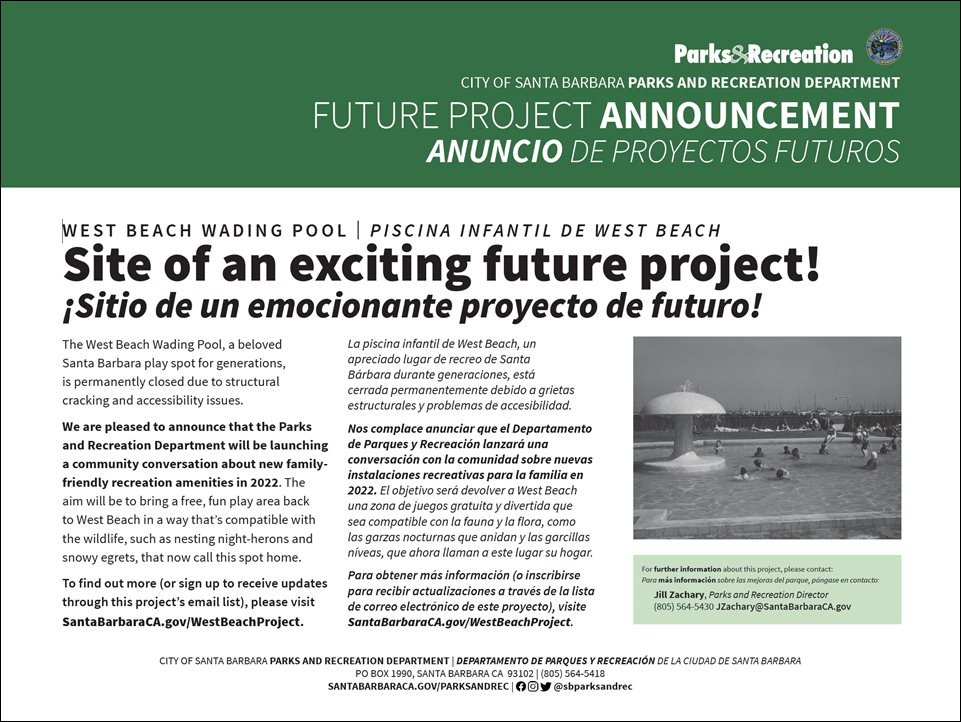
In 2018, the City of Santa Barbara appropriated $152,240 for preliminary planning of a Splash Playground just to the south of the seven ficus trees to replace the defunct and leaking wading pool that closed in 2014 during the drought. The preliminary plans from June 27, 2018 are attached. I am told by Parks & Recreation planner George Thomson that these plans are being revised but will retain the splash playground, picnic tables with a possible roof covering, climbing equipment and rest rooms. Plans are being revised to reduce costs, solve stormwater runoff issues, and further protect the nesting birds.
But the Parks & Recreation Department does not recognize the importance and value of a fenced in area to the south side of the trees (toward the harbor parking area) to the development of the young birds. A volunteer with the local Wildlife Care Network, Jim Hurnblad, has been monitoring the nests for 5 seasons. He checks the area every evening and every morning and rescues chicks that fall out of the trees before they can fly. He is therefore the most regular and frequent observer of the behavior of the nesting BCNH and Snowy Egrets there. He strongly objects to placing an attractive nuisance such as a Splash Playground adjacent to the trees in the area used by the birds. Instead, the trees and a buffer zone to the south of the trees should be declared ESHA in the Land Use Plan or Local Coastal Plan. The former wading pool could become an important educational nature park. If the City allows competition from a splash playground, this will attract children (ages 1-10 according to the design plans) who are likely in their enjoyment of the water features to chase or scare the birds. Their parents are likely to object to the smell and other detractions of a large number of defecating birds in their water play area.
 Birds of Los Baños